Part Two — The Grammar of Home
Without a drone, music must argue for its home. Western harmony developed a grammar for that argument, built on tension, delay and return.
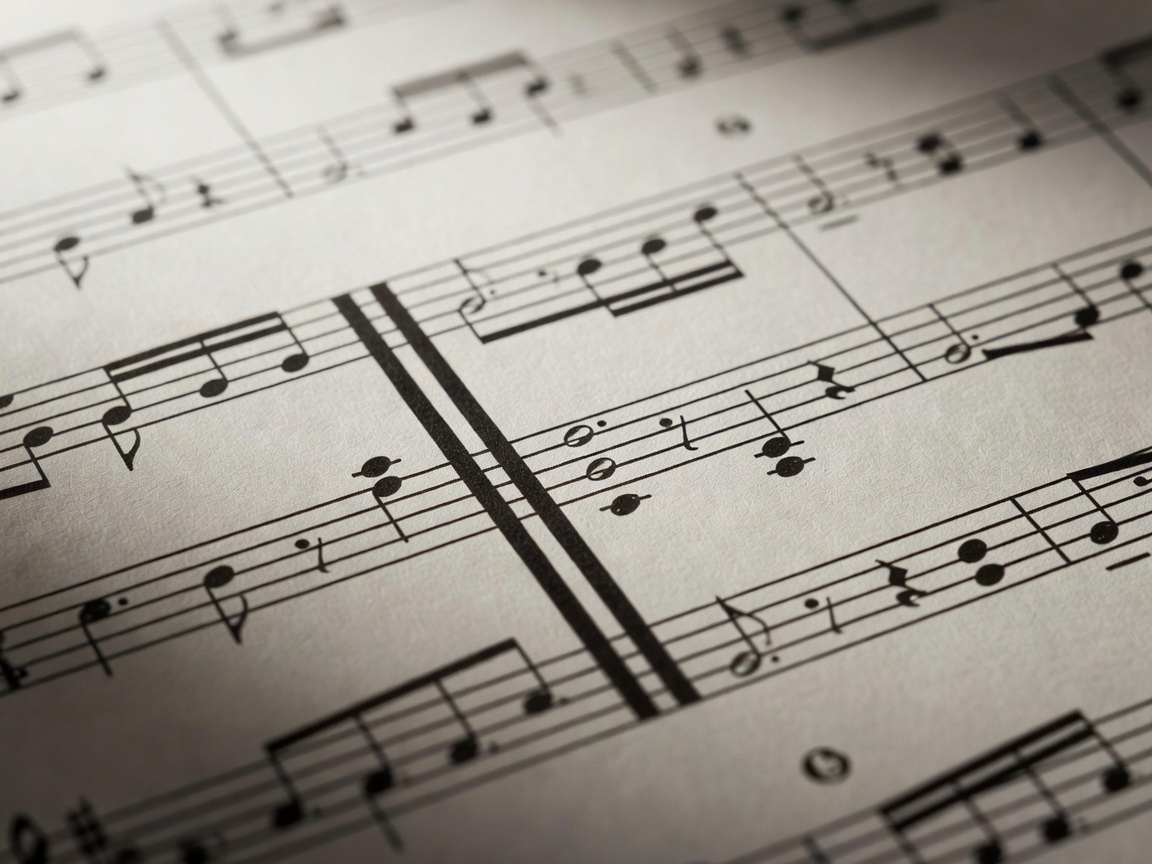
Play the opening of almost any familiar song with the last chord removed and most listeners will feel the absence before they can name it. The music is suspended. Something is owed. That feeling, of a debt that only one chord can pay, is the clearest everyday proof that harmony carries a sense of home. The question for this part is how a sequence of moving chords, with no drone beneath them, manages to point so firmly at one place.
Rameau's fundamental bass
In 1722 the French composer Jean-Philippe Rameau published his Traité de l'harmonie, a book that reorganised how Europeans talked about chords. Rameau proposed that beneath the actual bass line of any passage lies a "fundamental bass", the series of chord roots, and that these roots tend to move by fifth. The strongest motion of all, in his account, is from the chord built on the fifth degree of the scale, the dominant, to the chord on the first degree, the tonic.
Rameau tied this to acoustics, in a way that anticipated Helmholtz: the root of a chord was, for him, the sounding body from which its other notes emerge. His physics was not always sound, but his description of practice was durable. The dominant-to-tonic progression, called an authentic cadence, became the punctuation mark of Western music for roughly three centuries.
Why the dominant pulls
It helps to look inside the dominant chord. In C major it is G–B–D, often with an added F. The B sits a semitone below C and the F a semitone above E. Both are a single small step from notes of the tonic chord. Theorists call B the leading tone, and the name is apt: it leans. When the dominant moves to the tonic, two restless notes slide by the smallest possible distance into two stable ones, while the bass falls a fifth, the very interval Part One found so acoustically secure.
A tonic is not merely stated. It is earned, by leaving it convincingly and coming back by the shortest road.Part Two
This is the essay's central claim about harmony, and we want to word it carefully. The tonic in this tradition is defined less by what it is than by what leads to it. A C major chord heard alone is merely a chord. Preceded by its dominant, it becomes a conclusion. Home, here, is relational.
Naming the idea: tonality
The word for this whole system, tonalité, was popularised in the nineteenth century by the Belgian theorist François-Joseph Fétis, whose treatise of 1844 described tonality as a historically developed principle rather than a law of nature. Fétis was a man of strong opinions, but on this point his caution matches Helmholtz's: the grammar is real, and it is also learned.
Tuning played a supporting role. Johann Sebastian Bach's Well-Tempered Clavier, whose first book is dated 1722, the same year as Rameau's treatise, contains a prelude and fugue in each of the twenty-four major and minor keys. Whatever exact temperament Bach intended, and scholars still debate it, the collection demonstrated that home could be moved anywhere on the keyboard and still function. A tonic was a role, not a fixed pitch.
Schenker and the long return
In the early twentieth century the Viennese theorist Heinrich Schenker pushed the relational idea to its limit. He argued that a masterwork of the tonal tradition, however long, could be reduced to a single elaborated motion away from and back to the tonic, a background structure he called the Ursatz. Schenker's aesthetics were narrow and some of his views are rightly criticised today. His analytical insight, however, that entire movements can be heard as one prolonged journey home, still shapes how theorists listen.
The grammar, then, explains how home is built without a drone. But a grammar is a description of what composers do. It does not prove that listeners actually perceive what theorists describe. For that, we need evidence from ears rather than scores, which is where Part Three begins.